Cast Aluminum Die Casting Industry Milestones Over 30 Years
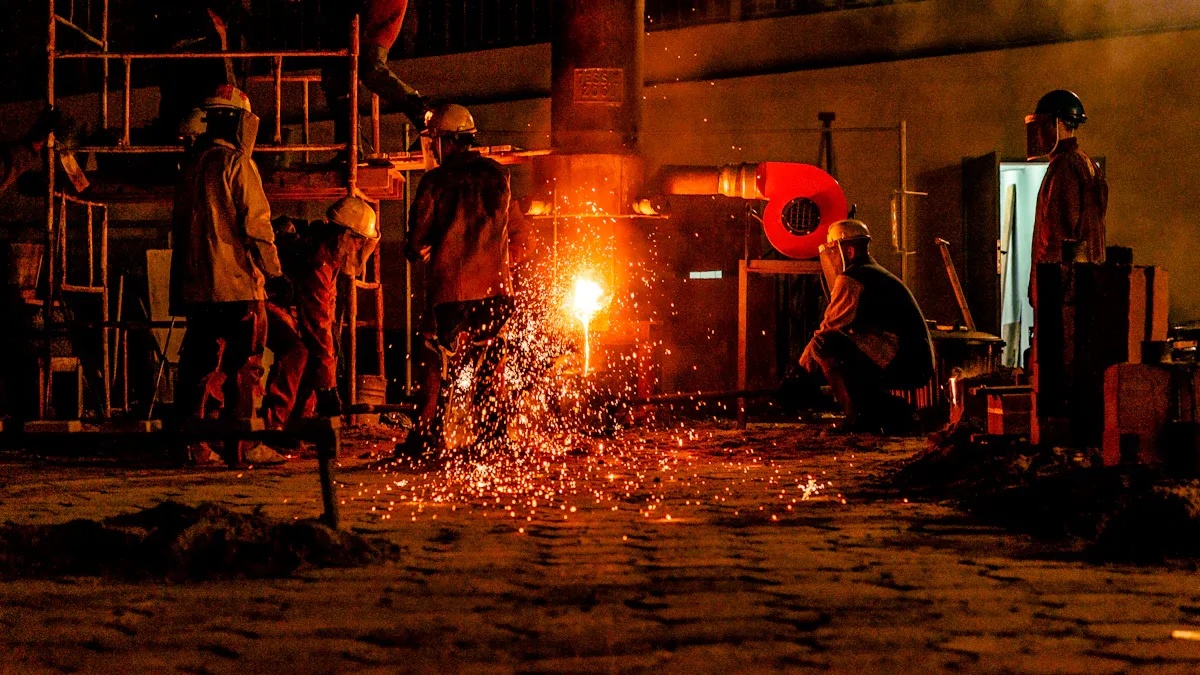
You witness remarkable growth in cast aluminum die casting, fueled by surging demand for lighting and pipe fittings. The industry’s market size soared, as shown below:
| Year | Market Size (USD Million) | CAGR (%) | Dominant Region | Key Trend |
|---|---|---|---|---|
| 2024 | 80,166.2 | N/A | Asia Pacific | Growth in transportation segment |
| 2030 | 111,991.5 | 5.8 | N/A | Lightweight material demand |
Key Takeaways
- The cast aluminum die casting industry has grown significantly, driven by demand for lightweight materials and automation.
- Sustainability is a key focus, with up to 95% of die cast products containing recycled aluminum, reducing environmental impact.
- Digital technologies, like mega casting machines and simulation software, enhance production efficiency and product quality.
Cast Aluminum Milestones by Decade
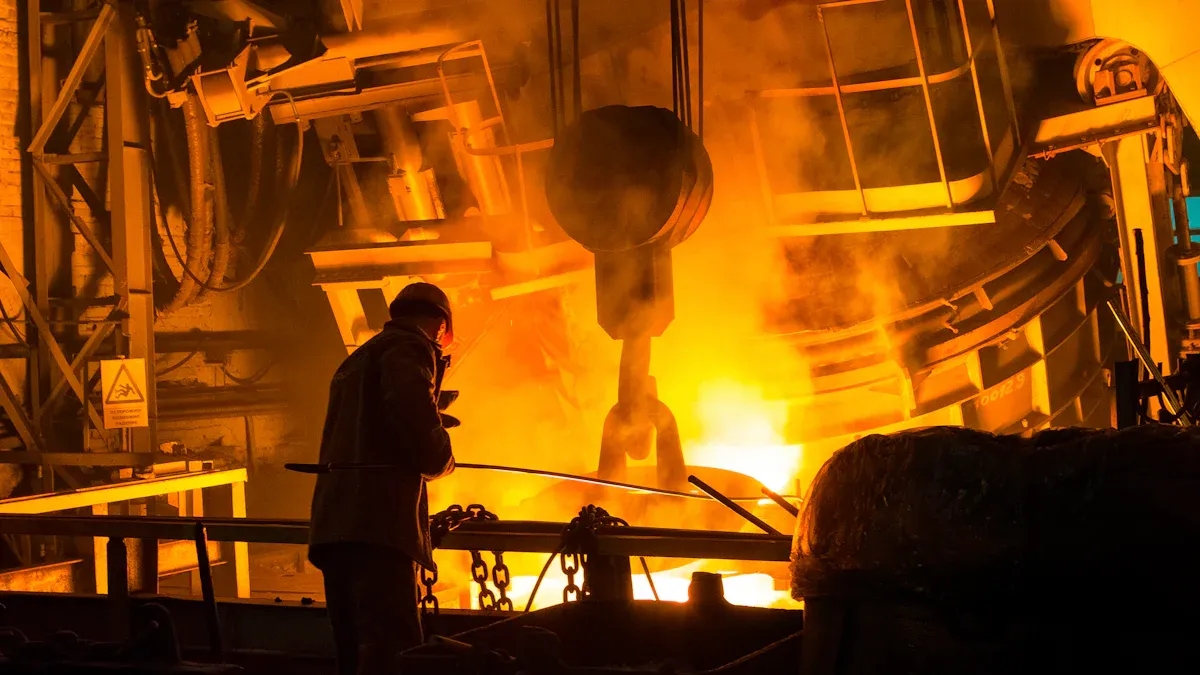
1990s: Laying the Groundwork for Modern Cast Aluminum
You saw the cast aluminum industry begin a transformation in the 1990s. Manufacturers introduced new processes that improved the quality and reliability of castings.
- Vacuum casting aimed to eliminate defects and enhance internal quality.
- Oxygen-filled die casting improved the consistency of finished products.
- Semi-solid metal rheological die casting expanded the range of applications for cast aluminum parts.
Semisolid molding became popular for automotive components, reducing gas porosity and shrinkage. Squeeze casting allowed for higher performance and weight reduction. These advancements set the stage for modern cast aluminum die casting.
| Process Type | Key Benefits |
|---|---|
| Semisolid Molding | Reduces gas porosity and solidification shrinkage; modifies microstructure; less than 3% shrinkage compared to 6% in 100% liquid. |
| Vacuum Die Casting | Designed to eliminate casting defects and improve internal quality. |
| Squeeze Casting | High integrity process that reduces porosity and shrinkage cracks, enhancing performance levels. |
2000s: Automation and Global Expansion in Cast Aluminum
You experienced a surge in automation during the 2000s. Robotics became a standard part of the die casting process, improving efficiency and repeatability. High-pressure vacuum die-casting technology enabled the production of structural, high-integrity cast aluminum parts. Manufacturers developed new alloys to improve castability and mechanical properties.
- Robotics reduced downtime during startup and maintenance.
- Automated systems allowed real-time control of molten aluminum flow and temperature, lowering human error.
- Fast production rates and automation made cast aluminum die casting cost-effective for mass production.
Automation helped you achieve higher consistency and lower costs, making cast aluminum a preferred choice for industries worldwide.
2010s: Sustainability and Precision in Cast Aluminum
You witnessed a shift toward sustainability and precision in the 2010s. Environmental regulations pushed manufacturers to adopt cleaner production methods. Recycling became a core initiative, with up to 95% of die cast products containing recycled aluminum. Energy-efficient processes reduced carbon footprints and waste.
| Initiative | Description |
|---|---|
| Recycling | Aluminum die casting materials are highly recyclable, with up to 95% of die cast products containing recycled aluminum. |
| Energy Efficiency | Die casting uses dies that can be reused many times, significantly reducing energy consumption compared to sand molds. |
| Carbon Footprint Reduction | The energy-efficient nature of die casting results in a smaller carbon footprint compared to other manufacturing methods. |
Precision engineering also advanced. You benefited from high pressure die casting (HPDC), high vacuum die casting (HVDC), and Rheo-HPDC technologies. These improvements led to better mechanical properties and fewer defects in cast aluminum parts.
- Agencies like the U.S. EPA and the European Commission enforced regulations to reduce VOC emissions and waste.
- Manufacturers transitioned to closed-loop recycling and renewable energy sources for melting processes.
2020s: Digital Transformation and Future Trends in Cast Aluminum
You entered a new era in the 2020s, driven by digital technologies and future-focused trends. Mega casting machines, such as 6,000-ton class high-pressure die-casting equipment, reduced the number of parts needed in production. Digital twin technology allowed you to simulate real-life production conditions, optimizing efficiency and quality.
| Technology | Description |
|---|---|
| Mega Casting Machines | 6,000-ton class high-pressure die-casting machines that reduce the number of parts in production. |
| Digital Twin | A technology that simulates real-life production conditions in cyberspace to optimize efficiency. |
| Flex Cell Production System | A modular production system that allows flexible responses to changes in production models. |
You also saw the rise of giga casting, which enables the production of entire vehicle sections as single pieces. Advances in materials led to stronger, more ductile alloys, improving the quality of cast aluminum parts. Vacuum-assisted casting further reduced porosity and increased part strength.
| Trend | Description |
|---|---|
| Giga Casting | Allows production of entire vehicle sections as a single piece, reducing assembly complexity and costs. |
| Advances in Materials | Development of new alloys that are stronger and more ductile, enhancing the quality of cast parts. |
| Vacuum-Assisted Casting | Improves process by removing air from the mold cavity, reducing porosity and increasing part strength. |
You now operate in a landscape shaped by digital transformation, sustainability, and advanced engineering. These milestones position you to meet future challenges and market demands with confidence.
Cast Aluminum Innovations and Industry Impact
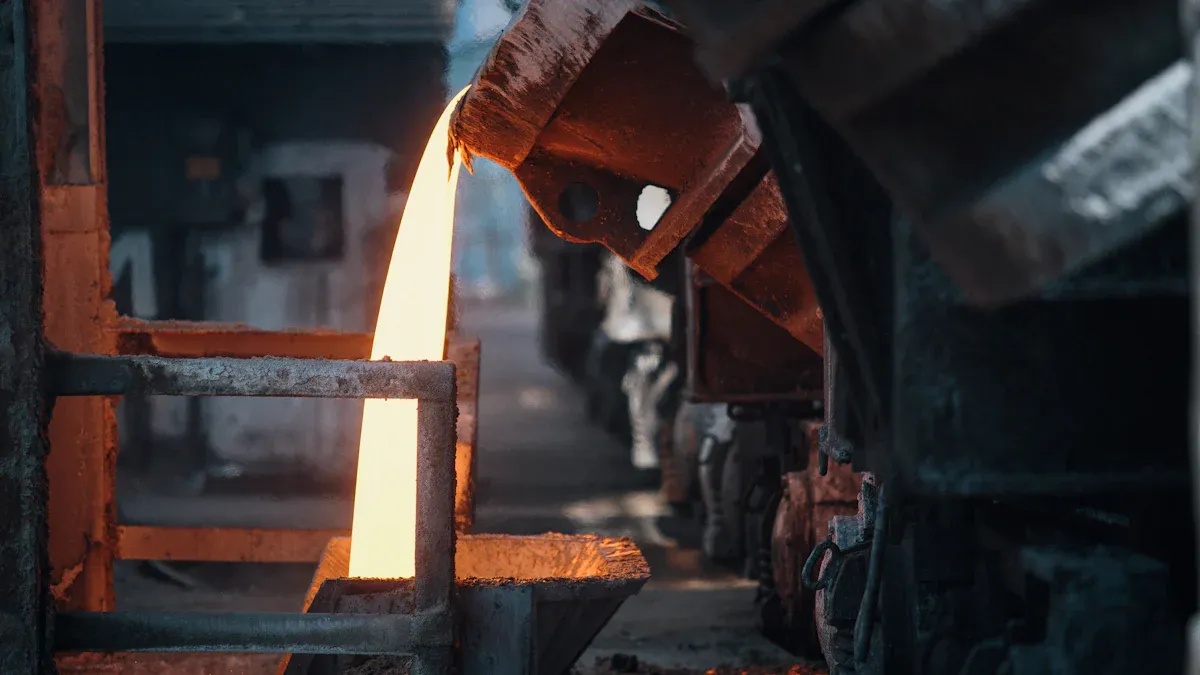
Technological Breakthroughs in Cast Aluminum
You have seen remarkable breakthroughs in cast aluminum die casting. Modern machines, such as Bühler’s Carat series, inject over 200 kg of aluminum, boosting productivity and enabling larger, more complex parts. Automation and smart manufacturing systems now control every step, improving efficiency and reducing errors. Simulation software lets you predict design impacts before production, saving time and money.
| Innovation | Description | Impact |
|---|---|---|
| Bühler’s Carat series | High-capacity die-casting machines | Up to 30% more productivity, larger part capability |
| Automation and SmartCMS | Automated process control | Higher efficiency and consistency |
| Casting simulation software | Predicts design changes before production | Lower costs, better quality |
You also benefit from 3D printing for mold creation. This technology improves thermal control and material flow, preventing defects and ensuring high-quality cast aluminum parts.
Responding to Market Demands with Cast Aluminum Solutions
You respond to changing market needs by focusing on lightweight materials and sustainability. Automotive and aerospace industries demand lighter parts for better fuel efficiency. You use advanced alloys and recycled aluminum to meet these needs. Electric vehicles require more cast aluminum components, driving innovation in design and production.
- Lightweight materials reduce vehicle and aircraft weight.
- Recycled aluminum supports eco-friendly manufacturing.
- Advanced alloys improve strength and durability.
Overcoming Industry Challenges in Cast Aluminum
You face challenges such as rising material costs, labor shortages, and supply chain disruptions. To overcome these, you diversify suppliers, manage inventory, and use real-time tracking systems. Advanced manufacturing techniques, like high-pressure die casting, help you maintain precision and speed.
By adopting these strategies, you ensure reliable delivery and high-quality cast aluminum products, even in a changing global market.
You have witnessed remarkable progress in cast aluminum die casting. Automation, robotics, and AI have driven market expansion and improved product consistency.
| Year | Market Size (USD Billion) | CAGR (%) |
|---|---|---|
| 2023 | 75.1 | 5.9 |
| 2032 | 126.8 |
- Ongoing research and rising demand for lightweight materials keep you at the forefront of innovation and excellence.
FAQ
What advantages does cast aluminum die casting offer you?
You gain lightweight, durable parts with excellent corrosion resistance. Cast aluminum die casting delivers high precision and repeatability for complex shapes.
How do you ensure quality in cast aluminum die casting?
You use advanced inspection machines, precise CNC equipment, and strict process controls. Regular testing guarantees consistent quality for every part.
Can you recycle aluminum die cast products?
- Yes, you can recycle aluminum die cast products.
- Most cast aluminum parts contain recycled material, supporting sustainability and reducing environmental impact.